
Sometimes achieving a goal feels more like a dream? Or life seems so chaotic that it’s hard to filter through it and even create a goal, let alone a realistic one. You’re left with stressful feelings that tend to carry over into other areas of your life. Proper goal setting is one powerful way to mitigate this stress.
You need to set clear, achievable goals. Goal setting provides direction, fosters a sense of control, and transforms chaos into manageable steps, thus reducing stress. How does it work to reduce stress and how can you create achievable goals? Read on to find out and for tips on setting goals. In just a few minutes you’ll start feeling the calm set in.
WHY SETTING GOALS REDUCES STRESS
1. Provides Clarity: Stress often arises from not knowing where to start or what to prioritize. By defining clear goals, you create a roadmap that brings focus to your efforts.
2. Boosts Confidence: Achieving even small milestones boosts self-esteem and reminds you of your capability to handle challenges.
3. Creates a Sense of Control: When you actively set and work toward goals, you shift from reacting to circumstances to proactively managing your life.
4. Breaks Up Overwhelming Tasks into Easier Steps: Big tasks can feel daunting, but breaking them up into smaller, actionable goals makes them more approachable.

STEPS TO SET GOALS FOR STRESS REDUCTION
1. Reflect on Your Priorities: Take time to consider what truly matters to you. Aligning your goals with your values ensures that your efforts bring genuine fulfillment. You can try brain dumping to see what needs to be done or resolved. See information on Brain Dumping/Mental Decluttering here.
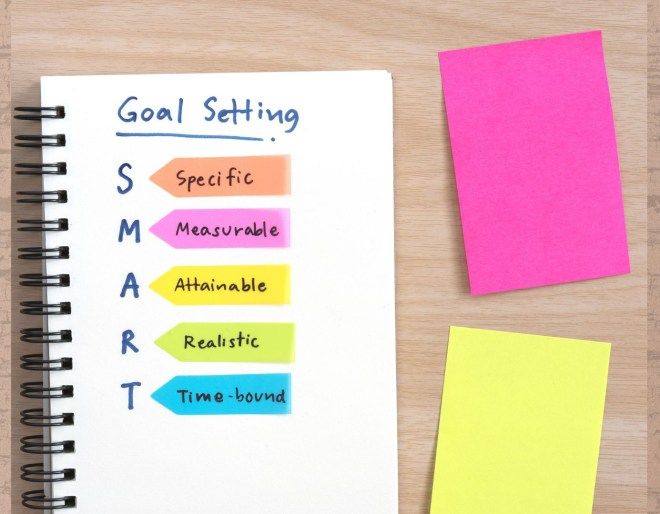
2. Make Goals SMART:
- Specific: Clearly define what you want to achieve.
- Measurable: Determine how you’ll track progress.
- Achievable: Set goals that are challenging but realistic.
- Relevant: Ensure your goals align with your broader objectives.
- Time-Bound: Set deadlines to create a sense of urgency and focus.
3. Prioritize and Organize: Not all goals are equally urgent or important. Rank them based on priority and tackle the most critical ones first.
4. Break It Down: Divide larger goals into smaller steps. For example, if your goal is to improve fitness, start with a 10-minute daily walk before progressing to more intense workouts.
5. Monitor Progress: Regularly check in on your progress. Celebrate small wins to maintain motivation and adjust your approach as needed.
TYPES OF GOALS TO REDUCE STRESS
1. Daily Micro-Goals: These are small, manageable tasks that provide quick wins, such as organizing your workspace or preparing a healthy meal.
2. Wellness Goals: Focus on activities that support mental and physical health, such as practicing mindfulness, exercising, or maintaining a consistent sleep schedule.
3. Long-Term Aspirations: Set broader goals for personal or professional growth, like learning a new skill or advancing in your career. These give you a sense of purpose and direction.
TIPS FOR OVERCOMING OBSTACLES IN GOAL-SETTING
1. Avoid Perfectionism: Goals don’t have to be flawless. Aim for progress, not perfection.
2. Be Flexible: Life is unpredictable, and it’s okay to adjust your goals as circumstances change.
3. Combat Procrastination: Break tasks into even smaller steps if you find yourself procrastinating. Sometimes, just starting is the hardest part.
4. Seek Support: Share your goals with positive friends, family, or a mentor. Their encouragement can provide accountability and motivation.

IN CONCLUSION
Setting goals is more than just a productivity tool; it’s a stress management strategy that empowers you to take control of your life. By defining what you want and creating a clear path to achieve it, you can replace feelings of being overwhelmed with confidence and purpose. So, start today—choose one goal, break it down, and take the first step toward a calmer, less stressed, and more focused life. I know you can do it.
RELATED ARTICLES
Staying Organized Reduces Stress
Less Decisions for Less Stress

 Stress Less Today
One Comment